Concrete vs. Pavers: Understanding Your Escondido Driveway Options
When it comes to upgrading your driveway or patio in Escondido, you're likely facing a common decision: concrete or pavers. Both materials have earned their place in residential construction, but they offer distinctly different benefits and drawbacks. Understanding the differences between these two popular options is essential for making an informed choice that aligns with your budget, lifestyle, and aesthetic preferences.
Concrete Driveways have long been the go-to choice for homeowners seeking a straightforward, durable solution. They're poured as a single continuous surface, creating a smooth, uniform appearance. Pavers, by contrast, are individual units (typically made from stone, brick, or concrete) that are laid out in patterns to create your finished surface. While both serve the same fundamental purpose, their performance characteristics, installation methods, and long-term maintenance requirements differ significantly. The choice between them often comes down to your priorities regarding durability, visual appeal, repair flexibility, and overall investment.
Durability and Longevity: Which Material Stands the Test of Time
Concrete driveways are renowned for their strength and longevity when properly installed and maintained. A well-constructed concrete surface can last 25 to 30 years or even longer, making it an excellent long-term investment. Concrete's monolithic structure means it distributes weight evenly across the entire surface, which helps prevent cracking and settling. However, Escondido's climate, with its occasional freeze-thaw cycles during winter months, can accelerate concrete deterioration if the surface isn't sealed and properly cared for. Hairline cracks may develop over time, and these can expand if water seeps in and freezes.
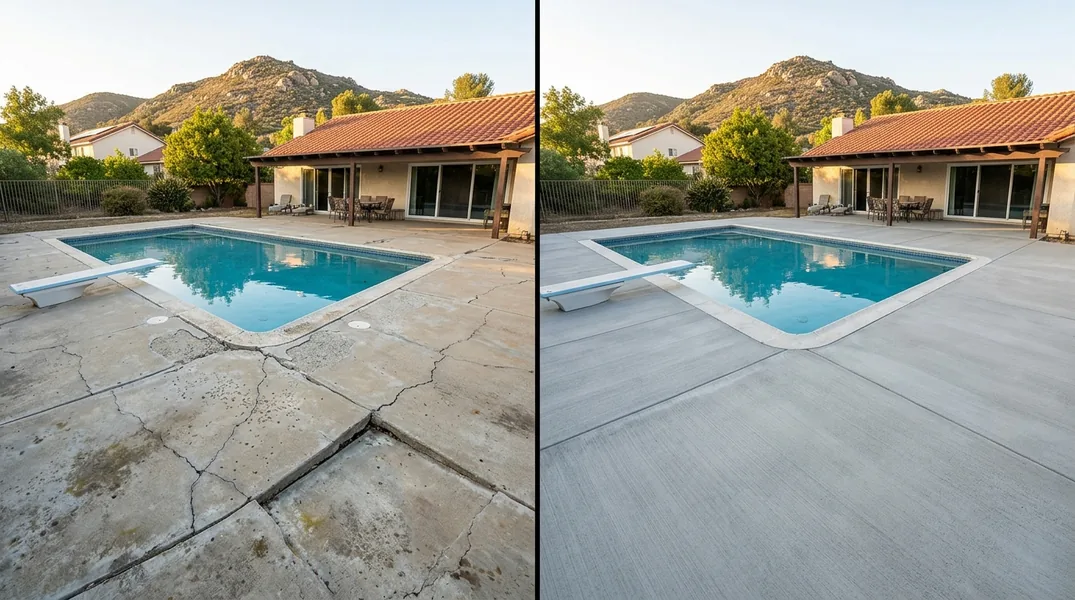
Pavers also offer impressive durability, with many installations lasting 20 to 25 years or more. Individual pavers are extremely hard and resistant to cracking under normal use. The key difference is that if a single paver becomes damaged, you can replace just that one unit without affecting the rest of your driveway. With concrete, a significant crack typically requires either patching (which may be visible) or extensive Concrete Repair & Resurfacing. Pavers' modular nature gives them an edge in terms of repair flexibility, though they do require more regular maintenance to keep the sand between joints in good condition.
Maintenance Requirements and Long-Term Care
Concrete requires relatively low maintenance compared to pavers, which is one reason it remains so popular. You'll need to sweep or rinse your concrete driveway periodically to keep it clean, and sealing it every 2 to 3 years will help protect against stains, water penetration, and UV damage. In Escondido, where the sun is strong for much of the year, regular sealing is particularly important to prevent fading and surface degradation. If cracks do appear, small ones can be filled with concrete caulk, though larger repairs may require professional attention.
Pavers demand more hands-on maintenance throughout their lifespan. The sand or polymeric sand between pavers can shift over time, especially with heavy use or in areas with significant temperature fluctuations. You'll need to occasionally re-sand joints to maintain structural integrity and prevent weeds from growing through gaps. Pavers also require periodic sealing to protect against staining and weathering. Additionally, if you experience settling or shifting in your base, individual pavers may become uneven, creating a tripping hazard. While these maintenance tasks aren't overly difficult, they do require more attention than concrete generally demands.
Aesthetic Appeal and Design Flexibility
One of the strongest arguments for choosing pavers is the incredible design flexibility they offer. Pavers come in countless colors, textures, sizes, and patterns. You can create intricate designs, blend different materials, and customize your driveway or patio to match your home's architectural style perfectly. Whether you prefer a traditional brick look, modern geometric patterns, or rustic stone aesthetics, pavers can deliver. This versatility makes them particularly appealing for homeowners who view their outdoor space as an extension of their home's character.
Concrete, while less varied in its natural state, shouldn't be dismissed for aesthetics. Stamped & Decorative Concrete options allow you to achieve the look of pavers, stone, or tile at a lower cost. Concrete can be stained, scored, exposed aggregate, or textured to create sophisticated, eye-catching designs. For homeowners seeking a polished, contemporary look or wanting to mimic natural stone without the complexity of pavers, decorative concrete is an excellent choice. The key is that while concrete offers more design options than basic gray slabs, pavers inherently provide greater visual variety and the authentic charm of individual units.
Cost Comparison: Concrete vs. Pavers in Escondido
When evaluating pricing for your driveway or patio project, concrete typically offers a more budget-friendly upfront cost. Standard concrete driveways generally range from $4 to $8 per square foot for basic installation, depending on local labor rates and site conditions. Decorative concrete options cost more, typically $8 to $15 per square foot, but still often undercut paver pricing. The initial installation is straightforward and relatively quick, which helps keep labor costs down.
Pavers carry a higher initial investment, usually ranging from $10 to $20 per square foot or more, depending on the material quality and pattern complexity. The labor-intensive installation process, which involves careful base preparation, individual placement, and joint filling, contributes to this higher cost. However, when you factor in long-term maintenance and repair costs, the picture becomes more nuanced. Concrete may require periodic resealing and occasional crack repair, while pavers need ongoing joint maintenance and potential individual unit replacement. Over a 20 to 30-year period, these costs can add up. For a detailed estimate tailored to your specific project in Escondido, we recommend reaching out to discuss your needs and get a free estimate from our team.
Making Your Decision: Which Material Is Right for You
Choosing between concrete and pavers ultimately depends on your priorities and circumstances. If you value simplicity, lower upfront costs, and minimal maintenance, concrete is likely your best choice. It's ideal for homeowners who want a clean, functional surface that will serve reliably for decades with basic care. Concrete also makes sense if you're on a tighter budget or prefer not to deal with regular joint maintenance.
Conversely, if you prioritize aesthetic customization, don't mind periodic maintenance, and want the flexibility to replace individual damaged units, pavers are worth the investment. They're particularly appealing for high-end properties, formal entertaining spaces, or homes where curb appeal is a top priority. Pavers also perform well in areas prone to settling or movement, since individual units can adjust without compromising the entire surface. Whatever you choose, working with experienced professionals ensures proper installation and maximum lifespan. The team at Escondido Concrete is ready to help you evaluate both options and recommend the best solution for your Concrete Patios or driveway. Call us at (760) 546-6541 today to discuss your project, or visit our website to learn more about our services.
Looking for a professional concrete contractor in Escondido? Escondido Concrete responds fast for all your concrete needs.
Get a Free QuoteOur services: Concrete Driveways · Concrete Patios · Stamped & Decorative Concrete